

Social Care
-
 Learning how and why adult sexual exploitation happens, how to identify and define it is crucial for anyone who has safeguarding responsibilities at any level. This training will give learners best practice advice on how to report and act on suspicions of abuse. This course covers a wide range of topics to help learners gain a full understanding of Adult Sexual Exploitation.
 -
 This e-learning course is for anyone who works closely with children or in a capacity where they might encounter someone on the autism spectrum; for example, teachers, youth workers, carers, nurses and even customer service professionals. The Introduction to Autism Spectrum training course has been updated with help from subject matter experts to include more information on autism spectrum disorder (ASD) and to cover the Oliver McGowan case.
 -
 When working in social care its essential to know how to help assist and move people in your care and other objects such as equipment. As a daily common task, it is incredibly important to help reduce the risk of harm to staff and service users. Discover the correct way to move and handle individuals and required equipment safely as well as understanding the relevant legislations, guidelines, and procedures to help minimise risks. This 30-minute course can be used as an introduction or as refresher training to ensure that all learners have up to date knowledge of Assisting and Moving, People and Objects.
 -
 Our introductory course is aimed at anyone who works with children, from social care workers to teachers, and wants to understand attachment theory. Attachment Theory is a well-established theory which illustrates the key role attachment plays in the development of a child through to adulthood, how they form relationships with others and how they perceive themselves. Using the context of attachment theory, our course is designed to provide you with insights into children’s behaviour and development, and what you can do to help a child who may be struggling.
 -
 Everyone wants to stay safe and healthy, and that’s why health and safety (H&S) at work is enshrined in law. Being unwell or put at risk of harm has wide implications for both the individual affected and the business they work for. When the Health and Safety at Work Act came into force in 1974, businesses were now responsible for keeping their employees safe and well. That included training them regularly in how to do that. This short course on Awareness of Health and Safety at Work helps you understand the importance of this topic.
 -
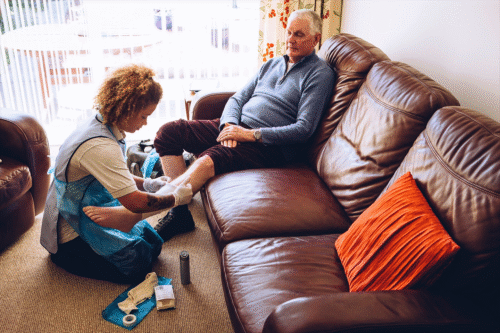 Be introduced to the topic of basic life support and first aid with this short online course. Explore topics within the course such as what basic life support is, what accidents can happen in the workplace, what sudden illnesses could be whilst also understanding which tasks need specialist training.
 -
 Care Certificate training is an important part of any health and social care role. Our digital workbooks are the perfect support aid to the Care Certificate assessment, helping learners acquire the knowledge needed before they are assessed. The Care Certificate was introduced in 2015 as a way of ensuring that training and development for support roles in health and social care were consistent, and that everyone was working towards the same skills, knowledge and behaviour. It was updated in March 2025 to include the mandatory Oliver McGowan Training.
 -
 This course provides information on dealing with both Child Sexual Exploitation (CSE) and Adult Sexual Exploitation (ASE). Aimed at those who work with vulnerable individuals, it includes guidance on grooming, trafficking, consent and reporting. This course combines information on both Child Sexual Exploitation (CSE) and Adult Sexual Exploitation (ASE), both how they differ and what they have in common.
 -
 This course aims to give learners a deeper understanding of child criminal exploitation and gang-related issues by defining what these key terms mean. This training will also help learners to identify the signs and symptoms of abuse and what to do if they suspect a child or young person is becoming involved in gang activities. County lines is another crucial issue related to gang activities, within this training, learners will gain an understanding of this issue and how it can differ from other gang-related activities.
 -
 This Child Exploitation and Extra-familial Harm training has been designed for those working with at risk children or young people and covers the effects and impacts of exploitation and extra-familial harm of children. It has up-to-date information on CSE, learner challenges and scenarios for an interactive learning experience. Ensuring you can identify the signs and symptoms of child exploitation and extra-familial harm is crucial for anyone working with children.
 -
 The modules in this course provide information on the potential causes of poverty, how to help children and their families, guidance on multi-agency working and the learner's roles and responsibilities as a practitioner. This course is for anyone who is working or will be working with children who may be in poverty or vulnerable to poverty.
 -
 The course describes the definition of collaboration and what it means in the workplace, including some of the challenges and solutions to effective and successful collaboration. This Collaborative Working Techniques course describes the definition of collaboration and what it means in the workplace, including some of the challenges and solutions to effective and successful collaboration.
 -
 Working in social care means you’re likely to meet, work with and assist a diverse range of individuals who all require effective communication, sometimes in different ways. Understand why communication is important within social care and how to meet the language needs and wishes of others, aiming to reduce communication barriers and make the working process as smooth as possible for staff and individuals alike.
 -
Sale!
 This training pack contains two health and safety courses for workers in any sector. The Fire Safety training conforms to government fire safety regulations and allows employers to train their staff to the legal requirements. By completing this COSHH training course, learners will be able to work with hazardous substances safely and effectively in a way that is appropriate to their work. Employees will understand the risks associated with dangerous substances, and the precautions they can take to ensure their safety. This training material will provide learners with the facts about the COSHH legislation and how important it is for businesses to ensure employee safety. Learners will recognise the responsibilities of employees and employers when it comes to COSHH regulations, understand COSHH guidelines and learners will also be able to identify harmful substances in the workplace and their effects.
 -
 It is important to understand that all individuals deserve to be treated with dignity and respect with their feelings and individual identities consider by all in health and social care settings. With this short online course discover the principles that underpin dignity in health and social care and how to maintain dignity, respect, and privacy of an individual with topics including how to promote independence, how to address basic human needs and encourage participation.
 -
 What is Dysphagia? Dysphagia is the term used to describe when a person has difficulties swallowing when drinking and eating. This short course has been created to help learners gain more awareness of this condition as well as gaining knowledge around how to help those suffering.
 -
 This early help or early intervention involves supporting families when a problem first occurs and can be utilised at any point in a child's or young person's life. Early help can have massively positive impacts on a child's future development and is therefore crucial that anyone working with children, young people or their families understands the importance of early help. This wide-ranging CAF safeguarding course is designed to help all those working with children, adults and families who could benefit from Early Help.
 -
 When working in a social care setting it is likely that you will be supporting and caring for people from a variety of backgrounds and cultures. It is important to ensure everyone within you care is treated equally and fairly, being given the same opportunities and treatments. With this short course understand the importance of equality and inclusion, how to work in an inclusive way and where and how to access information support and advise about diversity, equality, and inclusion.
 -
 Do you truly know what equality, diversity and inclusion are, the differences between them and how they impact on your working environment? Discover how to embrace equality, diversity and inclusion into your normal way of working and promote best practice within your organisation. Our 60-minute equality, diversity and inclusion in the workplace online course explores these three related, but different areas, imparting valuable insights which will increase any employee’s confidence in the topics.
 -
 As a manager you will be responsible for implementing equality, diversity and inclusion policies within your organisation. You also may be involved in recruitment or handling grievance and disciplinary matters so it’s important to understand these key subjects and how to how to live and breathe an ED&I strategy within your business. Our 60-minute online equality, diversity and inclusion for managers course explores these three related, but different areas, imparting valuable insights which will increase any manager’s confidence in the topics.
 -
 This wide-ranging course covers FGM (female genital mutilation), abuse linked to faith or belief, and forced marriage. This course help learners to understand the links between these issues, provides information on how to identify vulnerable people, and how to report and act on such knowledge. This course is specifically designed to help people coming into contact with young people and their families during the course of their work to promote good safeguarding practice, whilst being culturally aware.
 -
 When preparing food, feeding, and providing refreshments, it is important to ensure food safety requirements are met, and nutrition and hydration has been considered (and potentially monitored) to meet the needs and provide safety to people in your care. Learn how to promote a safe and hygienic working environment when preparing, serving and clearing away food and drink, meeting all safety requirements whilst being able to support individuals to have access to food and nutrition in accordance with their plan of care. This 30-minute course can be used as an introduction or as refresher training to ensure that all learners have up to date knowledge to be able to promote nutrition and hydration in health and social care settings.
 -
 Health and safety in health and social care is everyone’s responsibility to ensure staff and those in your care are kept safe and out of harm’s way. From exploring the use of risk assessments and how to handle hazardous substances, to discovering how to implement security measures, manage stress and promote fire safety in the work setting, this short course covers all the basics and is the perfect introduction.
 -
 When working in a social care setting, keeping staff and individuals in your care safe should be one of the highest priorities. Failing to prevent or control infections can lead to illness and in some cases fatalities. With this short online course discover roles and procedures in preventing and controlling infections, how to identify risk assessment procedures, the use Personal Protective Equipment (PPE) has and the importance of good personal hygiene.