-
 With this Person Centred Care in Social Care course understand the basics of being able to work in a person-centred way, how to establish consent when providing care and support and encourage active participation whilst also being able support the individual’s right to make choices.. This 30-minute course can be used as an introduction or as refresher training to ensure that all learners have up to date knowledge of Person-Centred Care in health and social care.
 -
 Having a basic knowledge surrounding Oral health means social care workers and supporters are able to ensure the individuals in their care can be properly supported to prevent pain and further health problems caused by poor oral health. Individuals in your care may not be able to verbalise their pain or discomfort for reasons as so it is important to understand the behavioural signs of someone who is suffering from dental pain. This 30-minute course can be used as an introduction or as refresher training to ensure that all learners have up to date knowledge of Oral Health.
 -
 When preparing food, feeding, and providing refreshments, it is important to ensure food safety requirements are met, and nutrition and hydration has been considered (and potentially monitored) to meet the needs and provide safety to people in your care. Learn how to promote a safe and hygienic working environment when preparing, serving and clearing away food and drink, meeting all safety requirements whilst being able to support individuals to have access to food and nutrition in accordance with their plan of care. This 30-minute course can be used as an introduction or as refresher training to ensure that all learners have up to date knowledge to be able to promote nutrition and hydration in health and social care settings.
 -
 Millions of workdays are lost globally each year due to preventable lifting injuries. Adopting safe lifting principles for heavy loads is key to improving your protection from injury. In this module, you'll delve into risk factors and responsibilities under national health and safety laws. Explore ergonomic approaches for musculoskeletal health and learn about developing risk assessments and control strategies for various moving and handling activities. This module provides the foundational knowledge and skills to minimise your risk of injury and ensure your safety, both at work and outside of work.
 -
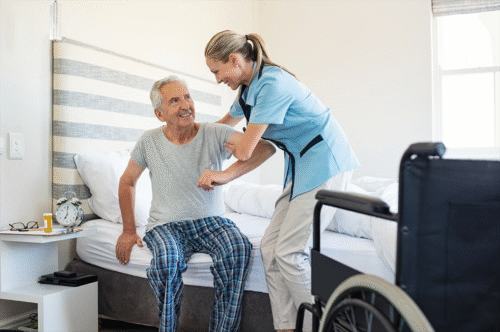 When working in social care its essential to know how to help assist and move people in your care and other objects such as equipment. As a daily common task, it is incredibly important to help reduce the risk of harm to staff and service users. Discover the correct way to move and handle individuals and required equipment safely as well as understanding the relevant legislations, guidelines, and procedures to help minimise risks. This 30-minute course can be used as an introduction or as refresher training to ensure that all learners have up to date knowledge of Assisting and Moving, People and Objects.
 -
 In Level 2, you will expand on basic moving and handling principles and delve into the situational factors and best practice procedures that specifically help protect a person's dignity and independence during movement and handling. A compassionate, person-centred approach to risk assessment not only tailors safety measures to individual needs, but also lays the foundation for cultivating a respectful and supportive environment. In this module, you'll discover how prioritising empathy and understanding fosters a culture of care. You will need to complete Moving and Handling Level 1 and Level 2.
 -
 Working in a health and social care setting means looking after or supporting individuals who sometimes need extra help. When in this setting it is important to understand the mental capacity of the individuals in your care, often carried out through assessment, as this will help tailor their support. There are various reasons to why someone may lack mental capacity, and in the cases where this is lacking, Deprivation of Liberty Safeguards (DoLS) looks to protect the person to ensure their liberty is not being deprived in their care arrangements.
 -
 This CPD approved Learning Opportunities and Reflective Practice has been designed for team leaders, managers, supervisors and anyone in or aspiring to be in a managerial position.
 -
 Care Certificate training is an important part of any health and social care role. Our digital workbooks are the perfect support aid to the Care Certificate assessment, helping learners acquire the knowledge needed before they are assessed. The Care Certificate was introduced in 2015 as a way of ensuring that training and development for support roles in health and social care were consistent, and that everyone was working towards the same skills, knowledge and behaviour. It was updated in March 2025 to include the mandatory Oliver McGowan Training.
 -
 You play a crucial role in preserving information privacy and confidentiality, so we've broken it down in straightforward terms to help you get started. It's time to strengthen your expertise in information security and record management in today's digital landscape. In this module, discover the essentials of safeguarding sensitive information and preserving data privacy. When things go wrong, learn to swiftly identify, and address potential data breaches, reporting incidents promptly to minimise their impact.
 -
 When working in a social care setting, keeping staff and individuals in your care safe should be one of the highest priorities. Failing to prevent or control infections can lead to illness and in some cases fatalities. With this short online course discover roles and procedures in preventing and controlling infections, how to identify risk assessment procedures, the use Personal Protective Equipment (PPE) has and the importance of good personal hygiene.
 -
 Health and safety in health and social care is everyone’s responsibility to ensure staff and those in your care are kept safe and out of harm’s way. From exploring the use of risk assessments and how to handle hazardous substances, to discovering how to implement security measures, manage stress and promote fire safety in the work setting, this short course covers all the basics and is the perfect introduction.