-
 In any workplace, there are health and safety hazards that need to be controlled to reduce the risk of accidents and injuries. It’s down to you and your organisation to make this happen. This module outlines common health and safety hazards in the healthcare sector, how to perform a risk assessment and what to do in the event of an incident. It also explores what a ‘culture of health and safety’ means, and what is expected of you and your organisation in order to achieve this.
 -
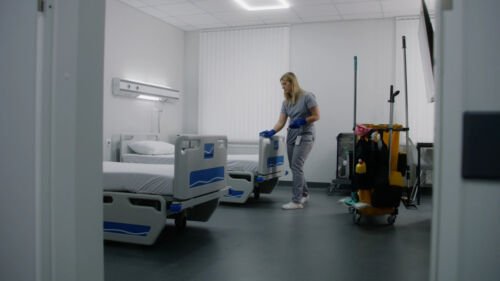 Infection poses a threat to everyone and can lead to severe illnesses, worsening of underlying conditions, or even fatalities. As part of your role, you need to understand the routes by which an infection can get into the body and how poor health or hygiene might pose a risk to yourself and others. This module looks at the importance of preventing and controlling the spread of infection, and best practice in the healthcare setting.
 -
 Infection Prevention and Control Level 2 builds on your understanding of the key concepts introduced in Level 1. This advanced course delves deeper into your clinical responsibilities as a healthcare professional, and will elevate your understanding of related components, such as risk assessments, hand hygiene, decontamination, waste disposal and PPE. Equip yourself with the knowledge and skills to implement Standard Infection Control Precautions (SICPs) and expand your arsenal to break the chain of infection in healthcare environments. By the end of this course, you'll be empowered to safeguard against infections with confidence and precision.
 -
 You play a crucial role in preserving information privacy and confidentiality, so we've broken it down in straightforward terms to help you get started. It's time to strengthen your expertise in information security and record management in today's digital landscape. In this module, discover the essentials of safeguarding sensitive information and preserving data privacy. When things go wrong, learn to swiftly identify, and address potential data breaches, reporting incidents promptly to minimise their impact.
 -
 Millions of workdays are lost globally each year due to preventable lifting injuries. Adopting safe lifting principles for heavy loads is key to improving your protection from injury. In this module, you'll delve into risk factors and responsibilities under national health and safety laws. Explore ergonomic approaches for musculoskeletal health and learn about developing risk assessments and control strategies for various moving and handling activities. This module provides the foundational knowledge and skills to minimise your risk of injury and ensure your safety, both at work and outside of work.
 -
 In Level 2, you will expand on basic moving and handling principles and delve into the situational factors and best practice procedures that specifically help protect a person's dignity and independence during movement and handling. A compassionate, person-centred approach to risk assessment not only tailors safety measures to individual needs, but also lays the foundation for cultivating a respectful and supportive environment. In this module, you'll discover how prioritising empathy and understanding fosters a culture of care. You will need to complete Moving and Handling Level 1 and Level 2.
 -
 Expanding on what you learnt in the introduction module, this advanced module offers healthcare professionals an in-depth exploration of radicalisation dynamics and counter-terrorism strategies. Throughout the course, you'll explore the complexities of radicalisation processes and examine preventive measures, including a detailed look at the government's 'Prevent' strategy, as well as interventions such as referrals and the role of Channel. By the end, you'll have gained advanced knowledge and practical skills to effectively reduce the risks of terrorism in your communities.
 -
 Radicalisation is the process through which a person comes to support extremist ideologies. It can result in a person supporting terrorist violence. Understanding how people are radicalised, and recognising the risk factors and signs of radicalisation, can help you to act appropriately and prevent people from being drawn into terrorism. This module looks at the government’s strategy for preventing terrorism, and what this means for healthcare professionals; how to recognise if an individual may be vulnerable to, or experiencing, radicalisation; and what to do if you have concerns.
 -
 In a cardiac emergency, every second counts, and knowing how to respond could mean the difference between life and death. This module is designed for non-clinical staff and imparts the essential skills needed to confidently intervene during a cardiac arrest. Throughout this module, you'll uncover the critical signs of cardio respiratory arrest and learn the fundamental steps of early and effective resuscitation. Covering everything from when to call for help to administering cardiopulmonary resuscitation (CPR) and using automated external defibrillators (AEDs), this course will provide you with all the knowledge and skills necessary to act swiftly and decisively in a crisis. Get ready to make a real difference – because being prepared can save lives.
 -
 In a cardiac emergency, your role as a qualified healthcare professional is pivotal in influencing patient survival. This module equips you with advanced skills for responding effectively during a cardiac arrest in adults, including the use of the NEWS system, recognition of cardiac arrest signs, adult resuscitation techniques, AED utilisation, and addressing choking incidents. Elevate your clinical skills and prepare yourself to make a difference in life-saving scenarios.
 -
 Every decision you make during a cardiac emergency can determine the fate of a precious life. In this module, you'll acquire essential skills for supporting newborns in line with national guidelines. Delve into key responsibilities, emergency response protocols, and temperature control techniques. Learn to master newborn-specific resuscitation and transition support within these guidelines, preparing you to deliver swift and effective care in critical situations.
 -
 In a cardiac emergency, your role as a qualified healthcare professional is pivotal in influencing patient survival. This module equips you with advanced skills for responding effectively during a cardiac arrest in adults, including the use of the NEWS system, recognition of cardiac arrest signs, adult resuscitation techniques, AED utilisation, and addressing choking incidents.