-
 Greater awareness of Sudden Infant Death Syndrome (SIDS) is one of the most effective ways to reduce cases. This course is designed to do just that, whilst ensuring learners gain knowledge on practical and effective ways to reduce the risks This course, Safer Sleeping for Babies, gives up-to-date information on how to make sleeping safer for babies and gives advice on lowering the chance of SUDC (Sudden Unexpected Death in Childhood).
 -
 This course will help learners to get a better insight into how situations can develop and how to effectively respond. This Safer Working Practices course has been updated to be compliant with new Keeping Children Safe in Education 2022 legislation and how this applies in the workplace or when working with children and young people.
 -
 Being able to identify and understand self-harm and its causes is crucial for anyone who works with vulnerable children, young people or adults. This training will help learners to understand what to do if they suspect someone is potentially self-harming. Being able to identify and understand self-harm and its causes is crucial for anyone who works with vulnerable children, young people or adults. This training will help learners to understand what to do if they suspect someone is potentially self-harming.
 -
 This training will look at how to balance addressing the issue of self-neglect with an individual’s right to private life and health and how to make safe decisions. Self-neglect is a problem in itself and can often be a symptom of other underlying problems. This course will enable you to identify it and react appropriately.
 -
 For many food business owners, setting up a home delivery service can be a great way to attract more customers and give them the edge over their competition. But knowing how to start their delivery service can be difficult. This online training will take learners through some of the key areas to consider when setting up a home food delivery service. This online training has been designed for employers and owners of food businesses who are looking to set up a home food delivery service.
 -
 We all have a responsibility to prevent sexual harassment from occurring in the workplace. This course focuses on how sexual harassment effects an employee including how to raise a complaint and what to do if you witness sexual harassment. The Worker Protection Act 2023 We have updated this sexual harassment in the workplace training course to include changes to the legislation within The Worker Protection Act 2023 which became applicable from 26th October 2024.
 -
 We all have a responsibility to prevent workplace sexual harassment from occurring. This course focusses on how sexual harassment effects a manager their responsibility including equal employment, preventing sexual harassment, how to react if an allegation is raised, and what you should do next. The Worker Protection Act 2023 We have updated this sexual harassment in the workplace training course to include changes to the legislation within The Worker Protection Act 2023 which became applicable from 26th October 2024.
 -
 Anyone working in the healthcare environment or has any safeguarding responsibilities should have an understanding of sexual health and how to promote good sexual health and behaviour. This online training course will give learners the knowledge they need to give safe and correct advice for any sexual health concerns. The Sexual Health course covers a wide range of topics including sexual behaviours, infections and diseases, preventative measures, and available treatments.
 -
 Our advanced course has been developed in collaboration with the Health and Safety Executive (HSE), the UK government agency responsible for the regulations of workplace health, safety and welfare. This online course covers the whole range of possible causes for slips, trips and falls in the workplace, how design and planning can help to avoid them, and the procedures to deal with them should they happen.
 -
 Our Online Slips and Trips: Intermediate course has been created in collaboration with the HSE and provides in-depth and knowledge into how to prevent slips and trips in the workplace. It provides more depth than our introductory course, and has been personalised for different workplaces and environments and designed for anyone in a managerial or supervisor role, middle managers or team leaders.
 -
 This Slips, Trips and Falls in the Workplace course has been created with businesses in mind and will ensure organisations are able to reduce the risk of slips, trips and falls in the workplace. This in turn will reduce the risk of injury and unwanted expenses. The chances are, you’ve slipped on something, tripped over something or fallen off something in the past and you’d rather not experience it again. Whether it’s a wet floor or an inconveniently placed cable, the hazards are everywhere. Despite seeming minor, slips, trips and falls can have serious consequences to our health as well as costing businesses their productivity, time and money when someone gets hurt. Knowing how to identify and remove hazards that could cause a slip, trip or fall is essential, no matter what your workplace environment is like.
 -
 This course consists of three sections, focusing on learning disabilities, dementia and mental health. In each section the social model of disability will be applied, providing examples for you to consider. Always remember to read and follow the individuals care plan or support plan. This 30-minute course can be used as an introduction or as refresher training to ensure that all learners have up to date knowledge of Specific Conditions in Health and Social Care.
 -
Sale!
 Staff working in a healthcare environment need to ensure that they undertake statutory training to ensure they are able to do their job safely. This training package is designed to provide effective learning for staff to ensure they understand how to work safely in a healthcare environment. It is ideal as induction training, and can be completed by staff at their convenience as all progress will be saved. There are challenges throughout the course to test your knowledge on what you have learnt so far. The training package includes 10 other essential statutory and mandatory courses – to help with your staff training needs. Our Statutory & Mandatory Training Courses have been designed to work on all devices including mobiles, laptops, tablets and desktops giving you the flexibility to complete the training at a time and in a location suitable for you.
 -
 This online course explores the important subject of conflict resolution, imparting valuable insights which will increase any employee's confidence in the topic and their conflict resolution skills. The course explores areas such as how to spot the early signs of conflict, mitigate and reduce the risk and if required instigate a conflict resolution process, escalating and managing conflict in a more formal way. You'll also learn how to protect yourself in the event of a breakdown of communication that escalates into violence, including practical strategies for employing 'reasonable force' when necessary. Finally, you will have an opportunity to learn more about post-incident support and familiarise yourself with relevant procedures.
 -
 In today's healthcare landscape, fostering an inclusive environment that respects and upholds the principles of equality, diversity, and human rights is not just a moral imperative but a legal requirement. Aligned with the Core Skills Training Framework, this course has been meticulously designed to equip healthcare professionals with the essential knowledge and skills to navigate the complexities of equality, diversity, and human rights.
 -
 Fire Safety training is a legal requirement and this course covers the hazards and risks as well as demonstrating the legal responsibilities towards fire prevention in the workplace. Covering hazards and risks, this module will demonstrate the legal responsibilities towards fire prevention in the workplace.
 -
 In any workplace, there are health and safety hazards that need to be controlled to reduce the risk of accidents and injuries. It’s down to you and your organisation to make this happen. This module outlines common health and safety hazards in the healthcare sector, how to perform a risk assessment and what to do in the event of an incident. It also explores what a ‘culture of health and safety’ means, and what is expected of you and your organisation in order to achieve this.
 -
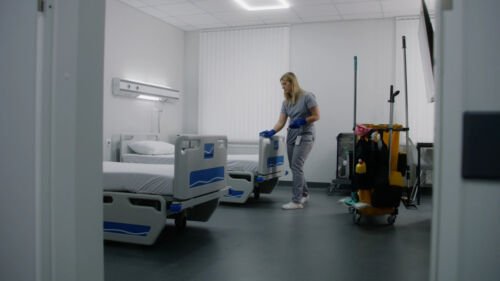 Infection poses a threat to everyone and can lead to severe illnesses, worsening of underlying conditions, or even fatalities. As part of your role, you need to understand the routes by which an infection can get into the body and how poor health or hygiene might pose a risk to yourself and others. This module looks at the importance of preventing and controlling the spread of infection, and best practice in the healthcare setting.
 -
 Infection Prevention and Control Level 2 builds on your understanding of the key concepts introduced in Level 1. This advanced course delves deeper into your clinical responsibilities as a healthcare professional, and will elevate your understanding of related components, such as risk assessments, hand hygiene, decontamination, waste disposal and PPE. Equip yourself with the knowledge and skills to implement Standard Infection Control Precautions (SICPs) and expand your arsenal to break the chain of infection in healthcare environments. By the end of this course, you'll be empowered to safeguard against infections with confidence and precision.
 -
 You play a crucial role in preserving information privacy and confidentiality, so we've broken it down in straightforward terms to help you get started. It's time to strengthen your expertise in information security and record management in today's digital landscape. In this module, discover the essentials of safeguarding sensitive information and preserving data privacy. When things go wrong, learn to swiftly identify, and address potential data breaches, reporting incidents promptly to minimise their impact.
 -
 Millions of workdays are lost globally each year due to preventable lifting injuries. Adopting safe lifting principles for heavy loads is key to improving your protection from injury. In this module, you'll delve into risk factors and responsibilities under national health and safety laws. Explore ergonomic approaches for musculoskeletal health and learn about developing risk assessments and control strategies for various moving and handling activities. This module provides the foundational knowledge and skills to minimise your risk of injury and ensure your safety, both at work and outside of work.
 -
 In Level 2, you will expand on basic moving and handling principles and delve into the situational factors and best practice procedures that specifically help protect a person's dignity and independence during movement and handling. A compassionate, person-centred approach to risk assessment not only tailors safety measures to individual needs, but also lays the foundation for cultivating a respectful and supportive environment. In this module, you'll discover how prioritising empathy and understanding fosters a culture of care. You will need to complete Moving and Handling Level 1 and Level 2.
 -
 Expanding on what you learnt in the introduction module, this advanced module offers healthcare professionals an in-depth exploration of radicalisation dynamics and counter-terrorism strategies. Throughout the course, you'll explore the complexities of radicalisation processes and examine preventive measures, including a detailed look at the government's 'Prevent' strategy, as well as interventions such as referrals and the role of Channel. By the end, you'll have gained advanced knowledge and practical skills to effectively reduce the risks of terrorism in your communities.
 -
 Radicalisation is the process through which a person comes to support extremist ideologies. It can result in a person supporting terrorist violence. Understanding how people are radicalised, and recognising the risk factors and signs of radicalisation, can help you to act appropriately and prevent people from being drawn into terrorism. This module looks at the government’s strategy for preventing terrorism, and what this means for healthcare professionals; how to recognise if an individual may be vulnerable to, or experiencing, radicalisation; and what to do if you have concerns.
 -
 In a cardiac emergency, every second counts, and knowing how to respond could mean the difference between life and death. This module is designed for non-clinical staff and imparts the essential skills needed to confidently intervene during a cardiac arrest. Throughout this module, you'll uncover the critical signs of cardio respiratory arrest and learn the fundamental steps of early and effective resuscitation. Covering everything from when to call for help to administering cardiopulmonary resuscitation (CPR) and using automated external defibrillators (AEDs), this course will provide you with all the knowledge and skills necessary to act swiftly and decisively in a crisis. Get ready to make a real difference – because being prepared can save lives.
 -
 In a cardiac emergency, your role as a qualified healthcare professional is pivotal in influencing patient survival. This module equips you with advanced skills for responding effectively during a cardiac arrest in adults, including the use of the NEWS system, recognition of cardiac arrest signs, adult resuscitation techniques, AED utilisation, and addressing choking incidents. Elevate your clinical skills and prepare yourself to make a difference in life-saving scenarios.
 -
 Every decision you make during a cardiac emergency can determine the fate of a precious life. In this module, you'll acquire essential skills for supporting newborns in line with national guidelines. Delve into key responsibilities, emergency response protocols, and temperature control techniques. Learn to master newborn-specific resuscitation and transition support within these guidelines, preparing you to deliver swift and effective care in critical situations.
 -
 In a cardiac emergency, your role as a qualified healthcare professional is pivotal in influencing patient survival. This module equips you with advanced skills for responding effectively during a cardiac arrest in adults, including the use of the NEWS system, recognition of cardiac arrest signs, adult resuscitation techniques, AED utilisation, and addressing choking incidents.
 -
 Abuse can manifest in various forms and have devastating, long-lasting effects on the health and wellbeing of the individual. Begin your journey in safeguarding and protecting adults from abuse with Level 1, where you'll learn to recognise potential indicators of abuse, harm, and neglect. Gain confidence in taking appropriate actions if abuse is suspected whilst understanding the legislative framework supporting safeguarding practices.
 -
 Our Safeguarding Adults Level 2 course involves enhancing your safeguarding expertise, pushing your skills to the next stage of proficiency. Learn to provide effective advocacy, particularly in complex situations like mental capacity issues. Develop an understanding of your professional responsibilities within multidisciplinary and multi-agency settings and know when and how to refer concerns to social care. Enhance your documentation skills and grasp key statutory and non-statutory guidance to prepare yourself for more complex safeguarding scenarios.
 -
 Our Safeguarding Adults Level 3 course helps you achieve a deeper level of understanding of safeguarding adults, where you'll refine your ability to identify signs of various forms of abuse and neglect. Enhance your documentation skills and grasp key statutory and non-statutory guidance to prepare yourself for more complex safeguarding scenarios.
 -
 Child abuse, in its many forms, has a significant impact on a child’s wellbeing and development. This module looks at children’s rights in the context of safeguarding, key legislation, how to recognise the different types of child maltreatment and signs of abuse, and what to do if you need to raise a concern. By the end, you'll feel confident in identifying safeguarding concerns and taking appropriate action to protect children and young people.
 -
 As a healthcare professional, you have a responsibility to safeguard children. Building upon your foundational knowledge, this course will take you deeper into the complexities of safeguarding children within healthcare. You'll explore advanced topics, such as recognising potential signs of abuse, advocating effectively for children, and understanding specific risks like FGM, grooming, and radicalisation. The content aims to advance your skills in making child protection referrals and documenting concerns, including the procedures for sharing information with relevant parties. By the end, you'll be equipped with the expertise to navigate complex child protection scenarios confidently.
 -
 Tailored for experienced practitioners, our Level 3 Safeguarding Children offers comprehensive training in specialised safeguarding practices. Dive deep into topics such as conducting risk assessments, effective communication with children and young people, and the importance of contributing to serious case reviews. Learn how to refine your ability to identify opportunities for enhancement in safeguarding practices through participation in supervision and audits. Get ready to take your expertise to the next level and make a lasting impact in safeguarding and child protection.
 -
Sale!
 Staff working in a healthcare environment need to ensure that they undertake statutory training to ensure they are able to do their job safely. This training package is designed to provide effective learning for staff to ensure they understand how to work safely in a healthcare environment. It is ideal as induction training, and can be completed by staff at their convenience as all progress will be saved. There are challenges throughout the course to test your knowledge on what you have learnt so far. Our Statutory and Mandatory: Non-Clinical Training Package gives you a saving of 70% when compared to purchasing the 10 included courses separately.
 -
 The course begins with a review of stroke related statistics and some important facts about stroke. The course then goes onto describe what happens when a stroke occurs and the three main types in detail. What are the risk factors for stroke, which can be divided into two groups – modifiable and non-modifiable? Learn the acronym FAST for identifying stroke signs and symptoms. Learn what you can do to help whilst waiting for the emergency services. Learn how healthcare professionals should work with individuals who have suffered stroke. This course describes what treatments are recommended for the different types of stroke and more about the effects of stroke on the brain. It also explores rehabilitation and professional support for individuals suffering from stroke.