-
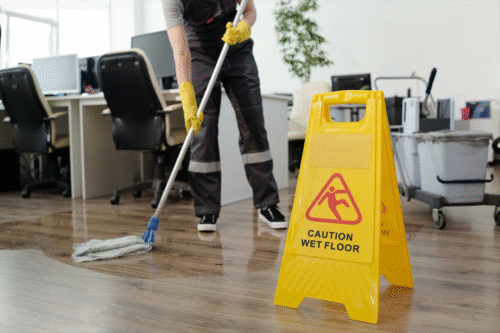 This Slips, Trips and Falls in the Workplace course has been created with businesses in mind and will ensure organisations are able to reduce the risk of slips, trips and falls in the workplace. This in turn will reduce the risk of injury and unwanted expenses. The chances are, you’ve slipped on something, tripped over something or fallen off something in the past and you’d rather not experience it again. Whether it’s a wet floor or an inconveniently placed cable, the hazards are everywhere. Despite seeming minor, slips, trips and falls can have serious consequences to our health as well as costing businesses their productivity, time and money when someone gets hurt. Knowing how to identify and remove hazards that could cause a slip, trip or fall is essential, no matter what your workplace environment is like.
 -
 Our Online Slips and Trips: Intermediate course has been created in collaboration with the HSE and provides in-depth and knowledge into how to prevent slips and trips in the workplace. It provides more depth than our introductory course, and has been personalised for different workplaces and environments and designed for anyone in a managerial or supervisor role, middle managers or team leaders.
 -
 Our advanced course has been developed in collaboration with the Health and Safety Executive (HSE), the UK government agency responsible for the regulations of workplace health, safety and welfare. This online course covers the whole range of possible causes for slips, trips and falls in the workplace, how design and planning can help to avoid them, and the procedures to deal with them should they happen.
 -
 This tenancy training course looks to educate first time tenants by exploring need to know topics such as how to find accommodation, managing finances, debt and budgeting, tenancy agreements and setting up basic utilities. Learners will be provided with the information they need to avoid anti-social behaviour and how to be a good neighbour. Additional information within the course include the basics of finding and viewing a property and the practicalities of running a new home - including paying rent, opening a bank account and getting advice on the services and support available.
 -
 From the 1st April 2012, the Tenant Services Authority (TSA) was disbanded and the Homes and Communities Agency (HCA) became responsible for regulating social housing providers in England. The new regulator will be known as the Social Housing Regulator. The Social Housing Regulator has 2 sets of standards, economic and consumer. Social Housing Providers are expected to meet both. However, the main focus of regulation will be on the economic standards which cover governance, financial viability, rent and value for money.
 -
 This e-learning module provides background into the history of social housing, and looks at the roles and responsibilities of social housing providers and their tenants.
 -
 This engaging online Manual Handling training gives you practical knowledge to prevent workplace injuries when handling loads. As one of our essential health and safety courses, it delivers critical skills in just 30-45 minutes. Manual handling injuries affect half a million UK workers annually, with back injuries being the leading cause of workplace absences. By law, employers must protect their workforce—and this training helps you meet those legal obligations while reducing costly downtime.
 -
 Effective leadership and control for Social Housing Providers; an introduction to governance. This course is primarily aimed at Social Housing Providers who are regulated for governance by the Social Housing Regulator. Those who are not, such as local authorities or Arm's Length Management Organisations (ALMOs) and Tenant Managed Organisations (TMOs) who do not own their stock, may also find it useful in terms of general good practice.
 -
 This Effective Anti-Social Behaviour Management course will give you the tools to effectively identify, deal with and manage anti-social behaviour primarily within the social housing sphere.
 -
 This Anti-Social Behaviour Enforcement course has been designed to provide landlords with the necessary knowledge and tools for tackling Anti-Social Behaviour. It also informs you of the different methods that police and the local authority use to deal with such matters. This course is a useful addition to any landlord who needs to better understand anti-social behaviour and its impacts.
 -
 This course has been designed to help raise awareness of Legionnaires' disease by explaining how outbreaks might occur, and highlighting water systems that have a potentially high risk of developing the Legionella bacterium. You may have heard about Legionnaires' disease or the Legionella bacterium, and it’s not something anyone wants to experience first-hand. On average there are approximately 200 to 250 reported cases of Legionnaires' disease each year in the UK, although many believe this total is generally underestimated. Contracting 'Legionella pneumophilia' bacteria can cause high fever and may become fatal in approximately 12% of cases. To prevent people from developing this disease, we need to know what it is and how to prevent it coming into contact with us. This legionella training module explains how outbreaks might occur, including how to identify which water systems have a potentially high risk of developing the Legionnella bacterium.
 -
 Employers are legally required to provide information, instruction and training to employees about fire precautions in the workplace. This online fire safety course helps you to meet this obligation by providing your staff with the knowledge and understanding required to act safely in the event of a fire in the workplace. On completion of the course and test you will receive a digital Fire Safety certificate which you can download and keep for your records. Fires can quickly cause a lot of damage and endanger people’s lives. History is littered with tragedies as a result of uncontrolled fires, so knowing how to prevent a fire from happening is essential. When a fire does break out, we all want to know how to act safely too. Fire is the probably the biggest risk to life that most people face at work, with around 50 people being killed and over 2000 seriously injured every year. To minimise the risk of fire in the workplace, it is vital that everyone is aware of the common causes of fire and the appropriate actions to take in the event of a fire, including how to escape safely from the scene.