

Health & Safety
-
 Everyone deserves to live and work in safe and healthy environments. Nobody wants to fall ill because of the conditions of the building they spend time in. Mould can be dangerous to health, especially for those that are vulnerable. Unfortunately, well over 10,000 people every year are becoming ill or developing health conditions as a result of mould exposure. Spotting mould and intervening early is essential to protect people from harm. This online damp and mould course gives you an introduction to what mould is, why it’s important and what you can do about it. Mould grows in certain environments, and once it’s started, it will keep coming back until the conditions are changed.
 -
Out of stock
 This online training course aims to provide learners with information on COVID-19 and suggests best practice for businesses in the current climate. There isn’t an industry or sector that hasn’t been affected by COVID-19. These challenging times are calling for businesses and organisations to adapt and adjust.
 -
 Misogynistic behaviour is sadly on the rise with research saying 64% of teachers in mixed-sex secondary schools hear sexist language in school on at least a weekly basis. A quarter (27%) of secondary school teachers say they would not feel confident tackling a sexist incident if they experienced or witnessed it in school.
 -
Sale!
 Staff working in a healthcare environment need to ensure that they undertake statutory training to ensure they are able to do their job safely. This training package is designed to provide effective learning for staff to ensure they understand how to work safely in a healthcare environment. It is ideal as induction training, and can be completed by staff at their convenience as all progress will be saved. There are challenges throughout the course to test your knowledge on what you have learnt so far. The training package includes 10 other essential statutory and mandatory courses – to help with your staff training needs. Our Statutory & Mandatory Training Courses have been designed to work on all devices including mobiles, laptops, tablets and desktops giving you the flexibility to complete the training at a time and in a location suitable for you.
 -
 This course consists of three sections, focusing on learning disabilities, dementia and mental health. In each section the social model of disability will be applied, providing examples for you to consider. Always remember to read and follow the individuals care plan or support plan. This 30-minute course can be used as an introduction or as refresher training to ensure that all learners have up to date knowledge of Specific Conditions in Health and Social Care.
 -
 Millions of workdays are lost globally each year due to preventable lifting injuries. Adopting safe lifting principles for heavy loads is key to improving your protection from injury. In this module, you'll delve into risk factors and responsibilities under national health and safety laws. Explore ergonomic approaches for musculoskeletal health and learn about developing risk assessments and control strategies for various moving and handling activities. This module provides the foundational knowledge and skills to minimise your risk of injury and ensure your safety, both at work and outside of work.
 -
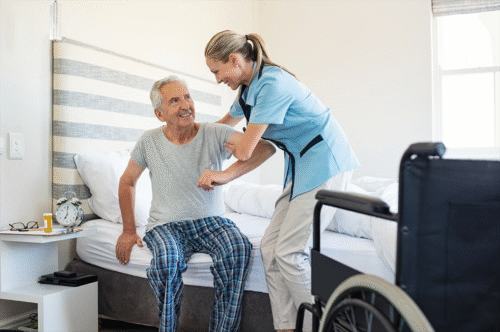 When working in social care its essential to know how to help assist and move people in your care and other objects such as equipment. As a daily common task, it is incredibly important to help reduce the risk of harm to staff and service users. Discover the correct way to move and handle individuals and required equipment safely as well as understanding the relevant legislations, guidelines, and procedures to help minimise risks. This 30-minute course can be used as an introduction or as refresher training to ensure that all learners have up to date knowledge of Assisting and Moving, People and Objects.
 -
 In Level 2, you will expand on basic moving and handling principles and delve into the situational factors and best practice procedures that specifically help protect a person's dignity and independence during movement and handling. A compassionate, person-centred approach to risk assessment not only tailors safety measures to individual needs, but also lays the foundation for cultivating a respectful and supportive environment. In this module, you'll discover how prioritising empathy and understanding fosters a culture of care. You will need to complete Moving and Handling Level 1 and Level 2.
 -
 Working in a health and social care setting means looking after or supporting individuals who sometimes need extra help. When in this setting it is important to understand the mental capacity of the individuals in your care, often carried out through assessment, as this will help tailor their support. There are various reasons to why someone may lack mental capacity, and in the cases where this is lacking, Deprivation of Liberty Safeguards (DoLS) looks to protect the person to ensure their liberty is not being deprived in their care arrangements.
 -
 Care Certificate training is an important part of any health and social care role. Our digital workbooks are the perfect support aid to the Care Certificate assessment, helping learners acquire the knowledge needed before they are assessed. The Care Certificate was introduced in 2015 as a way of ensuring that training and development for support roles in health and social care were consistent, and that everyone was working towards the same skills, knowledge and behaviour. It was updated in March 2025 to include the mandatory Oliver McGowan Training.
 -
 When working in a social care setting, keeping staff and individuals in your care safe should be one of the highest priorities. Failing to prevent or control infections can lead to illness and in some cases fatalities. With this short online course discover roles and procedures in preventing and controlling infections, how to identify risk assessment procedures, the use Personal Protective Equipment (PPE) has and the importance of good personal hygiene.
 -
 Health and safety in health and social care is everyone’s responsibility to ensure staff and those in your care are kept safe and out of harm’s way. From exploring the use of risk assessments and how to handle hazardous substances, to discovering how to implement security measures, manage stress and promote fire safety in the work setting, this short course covers all the basics and is the perfect introduction.