

School System in Portugal
The school system in Portugal is organised and regulated by the Ministry of Education. Education is compulsory for children and young people between the ages of 6 and 18, and public education is generally free. The system is structured into several stages that guide students from early childhood through higher education, aiming to provide equal opportunities and prepare learners for academic, professional, and personal success.
Overall, the Portuguese school system aims to promote lifelong learning, academic achievement, and social inclusion. By combining general education with specialised and vocational options, it seeks to prepare students for further studies, employment, and active participation in society.
- Pre-school education in Portugal is optional and intended for children aged 3 to 5. At this stage, the focus is on social interaction, emotional development, and the acquisition of basic communication and motor skills. Pre-school helps children adapt to a structured learning environment and prepares them for primary education.
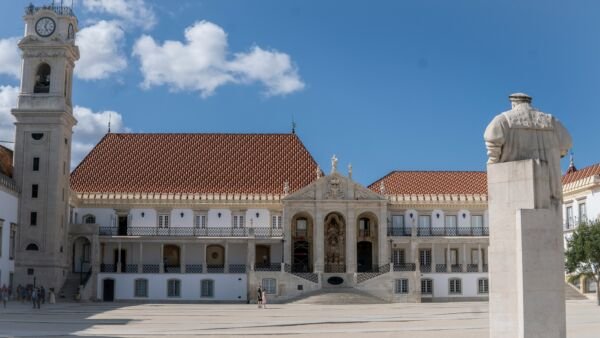
- Basic education in Portugal is compulsory and lasts for nine years. It is divided into three cycles. The first cycle, from grades 1 to 4, usually includes children aged 6 to 10 and concentrates on fundamental skills such as reading, writing, and mathematics. The second cycle, covering grades 5 and 6, expands the curriculum by introducing additional subjects and specialised teachers. The third cycle, from grades 7 to 9, offers a broader and more complex curriculum, helping students develop critical thinking and prepare for secondary education.
- Secondary education in Portugal lasts three years, from grades 10 to 12, and is also compulsory. During this stage, students can choose from different educational pathways based on their interests and future goals. These include scientific-humanistic courses for students aiming to enter higher education, as well as vocational and professional courses that emphasise practical skills and preparation for the workforce.
- Higher education in Portugal is provided by universities and polytechnic institutions. Universities are more academically oriented and focus on theoretical knowledge and research, while polytechnic institutions emphasize practical and professional training. Higher education degrees are structured into bachelor’s, master’s, and doctoral programs, in line with the European higher education framework.
Assessment in the Portuguese education system is based on continuous evaluation, including tests, exams, projects, and class participation. Student performance is typically graded on a scale from 0 to 20, with 10 as the minimum passing mark. National examinations are required at the end of secondary education for students who wish to enter higher education.